
How Can a 100-4000KVA generator set Safeguard Your Large-Scale Facility?
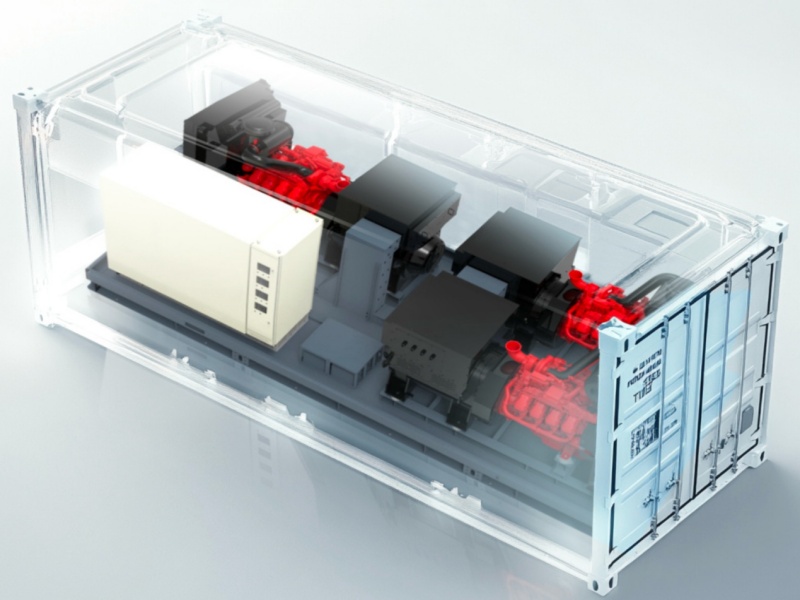
A 100-4000KVA generator set provides localized power generation to sustain industrial workloads during utility failure, maintaining voltage stability within +/- 1% tolerance. Data centers or manufacturing plants requiring 2MW loads utilize these systems to prevent hardware damage, with automatic start sequences initiating power delivery in under 10 seconds to maintain 99.999% uptime availability for sensitive digital infrastructure.
Grid instability impacts industrial sites, as shown by 2025 utility outage statistics reporting an average of 1.4 events per facility annually. Installing a 100-4000KVA generator set allows operations to bypass utility fluctuations, maintaining a steady 480V or 4160V output through integrated voltage regulation modules.
Facilities relying on internal combustion engines for standby power experience engine start reliability rates exceeding 98% when using advanced electronic governors. These systems manage fuel injection timing with microsecond precision, ensuring the generator matches electrical frequency requirements immediately upon load acceptance.
Maintaining frequency stability at 60Hz is essential for high-speed automated production lines, where a 5% deviation triggers emergency system shutdowns. By deploying a 100-4000KVA generator set, operators isolate the facility from transient voltage spikes, protecting delicate variable frequency drives and programmable logic controllers from electrical stress.
| Load Capacity (kVA) | Typical Application | Fuel Consumption (L/hr @ 75% load) |
| 100 | Small Office/Server Room | 22 |
| 500 | Manufacturing Line | 95 |
| 2000 | Data Center Module | 380 |
| 4000 | Hospital/Heavy Industry | 760 |
Fuel delivery systems for a 100-4000KVA generator set incorporate dual-wall storage tanks designed to operate for 24 to 48 hours without external replenishment. These tanks comply with NFPA 37 standards, utilizing leak detection sensors that communicate fluid levels to building management systems via Modbus TCP protocols.
Routine maintenance schedules for standby power units include monthly load bank testing, which verifies that the generator can sustain its rated output capacity. This practice prevents wet stacking in diesel engines, a condition occurring when an engine operates under less than 30% load for extended periods.
Cooling systems for these generators utilize large radiator arrays designed to reject heat in ambient temperatures up to 50 degrees Celsius. Maintaining coolant temperatures between 70 and 90 degrees Celsius prevents engine block cracks and ensures the system remains ready for rapid load-bearing states during unexpected utility interruptions.
Exhaust gas treatment systems, including Selective Catalytic Reduction (SCR) filters, reduce nitrogen oxide emissions by up to 90% to meet stringent environmental air quality regulations. Integrating these components into the exhaust stream of a 100-4000KVA generator set enables the facility to maintain compliance while running the unit during required maintenance or emergency events.
Digital control panels aggregate data from engine sensors, providing facility managers with real-time visibility into oil pressure, coolant temperature, and electrical load parameters. Managers receive alerts when metrics deviate from manufacturer specifications, allowing for predictive part replacement before a mechanical failure occurs.
| Monitoring Parameter | Target Range | Sensor Type |
| Oil Pressure | 40-60 PSI | Piezoresistive |
| Coolant Temperature | 160-195 F | Thermistor |
| Output Voltage | 480V +/- 1% | Potential Transformer |
| Frequency | 60Hz +/- 0.5Hz | Magnetic Pickup |
High-capacity electrical switchgear interfaces directly with the 100-4000KVA generator set, managing the flow of electricity between the utility feed and the internal distribution network. These breakers handle high fault currents, ensuring that a short circuit in a single branch does not trip the main generator protection relay.
Facilities requiring extreme reliability often implement parallel operation, where two or more generator units synchronize their frequency and phase to support a single bus. This configuration provides N+1 redundancy, allowing one unit to undergo repairs while the remaining generators support the facility load during an outage.
Enclosure designs for outdoor units use sound-attenuating materials to keep noise levels below 75 decibels at a distance of 7 meters, satisfying urban noise ordinances. These weather-resistant structures also protect internal alternators from moisture, which can degrade winding insulation resistance over time if humidity levels remain above 85% for long durations.
The electrical output from the alternator flows through an Automatic Transfer Switch that physically disconnects the facility from the utility grid before closing the connection to the generator. This isolation prevents back-feeding power into the utility lines, protecting line workers during maintenance and ensuring the safety of all electrical personnel on site.
Operational readiness depends on the health of the starter battery, typically a 24VDC system that must deliver high cranking amps to turn the engine flywheel. Battery chargers maintain a float voltage, extending the service life of lead-acid or lithium-ion cells to 3 to 5 years, ensuring the generator starts reliably even after long idle periods.